On November 4, 2025, a PhD scholar at Kerala University publicly accused the Dean of the Sanskrit Department of blocking his degree over caste bias and political beliefs. The scholar, Vipin Vijayan, alleged that Dr. C. N. Vijayakumari—who also heads the Faculty of Oriental Studies—used derogatory language and abused authority to halt the award of his PhD despite favorable expert evaluations. The university has ordered an inquiry, but the incident has already sparked debate about caste discrimination and administrative interference in academia.
The allegations surfaced in a series of social media posts and interviews, with Vijayan claiming derogatory remarks were made about his background and that confidential examiner reports somehow reached the media. He also denied claims that he was a union office-bearer, saying he never filed a nomination for the Research Scholars’ Union elections.
What the scholar says happened
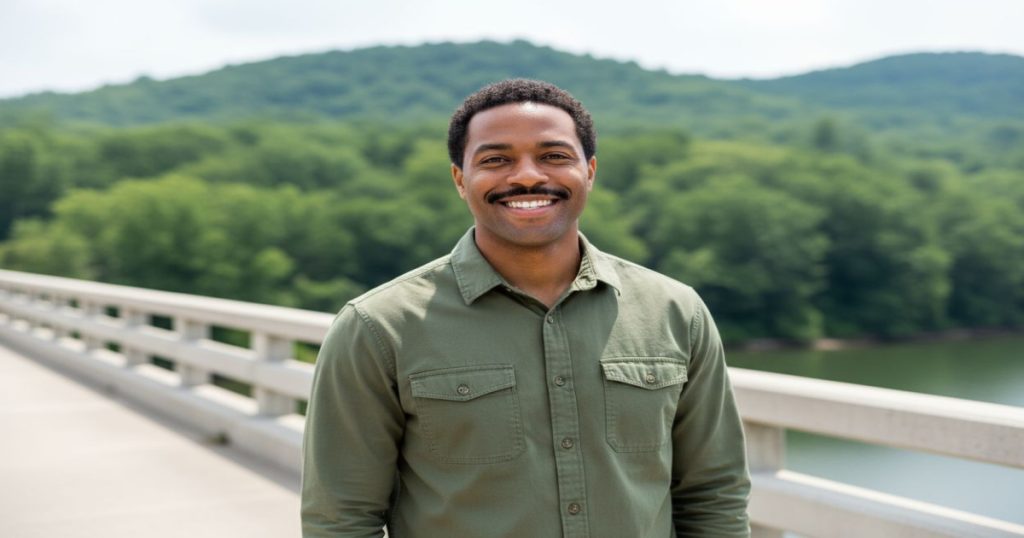
Vijayan, who holds an M.Phil in Sanskrit from Kerala University, said his PhD thesis was written in English in line with university rules. He said two external examiners appointed by the Vice-Chancellor positively evaluated his work and recommended the award of the degree. The open defense, he added, was chaired by Prof. Anil Pratap Giri of Allahabad University, who also endorsed the award. Yet, he said, the Dean refused to sign off and told him he was “not qualified even to utter a word in Sanskrit.”
He further alleged that the Dean used casteist language. The reported remark—“No matter how much a Pulayan or Parayan bows, Sanskrit will never yield to them as it does to Brahmins”—has been widely quoted. Vijayan said the comment wounded him deeply and compared the experience to the academic isolation faced by Dalit students in the country. He said he had previously endured repeated humiliation in silence to protect his research but had now decided to speak out and seek legal remedies.
Vijayan also accused the Dean of political bias. He said his own politics are left-wing, while the teacher’s ideology aligns with RSS–BJP politics, and that she is an active member of a Sangh Parivar-affiliated teachers’ organization at Kerala University. Vijayan asked why his politics were repeatedly questioned while hers were not.
He has also dismissed media portrayals of him as a “former general secretary” of the Research Scholars’ Union, stating that he never stood for or held that position. He noted the PhD file delay had cost him job opportunities and described the period as one of intense personal hardship.
What the university has said
According to reports, the University of Kerala has ordered a probe into the allegations. The inquiry reportedly aims to examine the conduct of the Dean, the process followed in the department, and the status of the scholar’s PhD. The university has also been asked to submit a report, and the matter remains under examination.
Requests for comment from the accused Dean, as reported, did not result in any statement as of the time of publication. The university’s formal response has focused on initiating the process rather than defending any particular position.
Procedural details and available evidence
Vijayan has provided a video, reportedly from his open defense, in which the chairperson reads out the examiners’ reports and recommends the award. He says the same evaluators who cleared his M.Phil—under the Dean’s own supervision—later found his PhD work acceptable. He questions how he could be deemed qualified for one and not the other.
Under Kerala University rules, the norms for PhD degrees allow theses to be submitted and defended in English or Malayalam, with the choice of language subject to department and university approval. Vijayan says the English medium was permitted, and that other research works in the department have been written and defended in English.
Confusion around the medium of the thesis and the defense does not, in itself, invalidate an evaluation process. When external experts and a chaired open defense all recommend the award, the academic hurdles are typically considered met. Administrative refusal to sign at that stage is often viewed as outside academic remit, unless procedural irregularities are identified.
Balanced view: what must be checked
Any serious claim of academic misconduct or discrimination requires careful verification. Key points to confirm include:
- Does the file contain the examiners’ independent reports and a chaired defense outcome, and do they match Vijayan’s description?
- Is there any record of the alleged casteist remarks made by the Dean?
- Was the medium of the thesis and defense in line with the official rules at the time?
- Did any political or organizational affiliations influence administrative decisions?
- Who accessed the confidential evaluation reports, and how did any documents reach the media?
Key events timeline
To situate the sequence, here’s a simple overview of reported dates and milestones:
| Date | Event | Status |
|---|---|---|
| Earlier this year | PhD thesis submitted and sent to two external examiners appointed by the Vice-Chancellor | Reports submitted; recommended award |
| Before November 4 | Open defense held; chaired by Prof. Anil Pratap Giri (Allahabad University) | Chairperson recommended award |
| Before November 4 | Dean allegedly refused to sign the file; made derogatory remarks | Under inquiry |
| November 4, 2025 | Scholar publicly alleged caste bias and political discrimination | Widely reported |
| November 4, 2025 | University ordered a probe into the matter | Ongoing |
What this means for academia
The case is being closely watched by students, scholars, and faculty across Kerala and beyond. It has already drawn comparisons to the 2016 Rohith Vemula case, in which a Dalit scholar died by suicide at the University of Hyderabad, sparking national conversations about caste, power, and exclusion in higher education.
Universities are expected to protect students from harassment and discrimination. If casteist language was used by a senior administrator, it is not just a breachof professional conduct but also a fundamental violation of the values universities are meant to uphold. When administrative power is used to impose ideological tests or reward students based on birth rather than merit, it corrupts the academic mission itself.
Many scholars note that the issue isn’t just about one incident, but about the structures that allow such power imbalances to persist. In departments where a single administrator can hold disproportionate control over degrees, there is always a risk that personal bias—whether political, caste-based, or ideological—will influence decisions that should be academic at their core.
Several universities in India have faced similar controversies over the years. In 2014, a professor at a prominent university in Uttar Pradesh was accused of stopping a PhD candidate’s work on grounds of “non-compliance,” though the candidate had passed all academic tests. Similar cases have emerged in Tamil Nadu, Karnataka, and Maharashtra, often involving candidates from marginalized communities who found their work arbitrarily blocked despite meeting all formal requirements.
The pattern, when examined, reveals concerning patterns. Examiners cleared the work. Chairs recommended the award. Yet files stalled at administrative levels. When candidates finally spoke up, the delays had often caused severe personal consequences—missed job opportunities, financial strain, and mental health challenges.
In the current Kerala case, the scholar’s background becomes relevant. He describes himself as coming from a community that has historically been excluded from classical Sanskrit scholarship. This is significant because Sanskrit, in the Indian academic imagination, has been closely tied to Brahminical learning. When someone from a marginalized background excels in this field, it can threaten established hierarchies and provoke resistance from those invested in maintaining control over cultural knowledge.
The Dean, as reported, denied the casteist allegations, but several colleagues and former students have stepped forward with their own accounts of her remarks over the years. They describe a pattern of behavior that made students from non-Brahmin communities feel unwelcome in the department. Some said they were discouraged from pursuing topics that challenged conventional interpretations of ancient texts, while others reported being told to “show more respect” when they failed to adopt the expected devotional tone toward classical scholarship.
These testimonies, even if anecdotal, paint a picture of an environment where academic excellence is measured not just by intellectual merit but by alignment with particular cultural and political positions. This is deeply problematic because it turns Sanskrit—a language and literary tradition that belongs to all Indians—into an exclusive domain for those who already hold social power.
The university’s inquiry, according to officials, will examine not just this specific case but also the general practices in the department. This broader scope suggests that administrators recognize the need to address systemic issues rather than treat this as an isolated incident. However, the speed and thoroughness of the investigation will be crucial. If it drags on for months without resolution, it will add to the scholar’s suffering and signal to other students that speaking up against administrative abuse carries no guarantees of timely justice.
Legal experts suggest that if the allegations are proven, this case could have implications beyond Kerala University. Courts in India have consistently ruled that universities cannot discriminate based on caste, and the denial of a degree based on birth rather than academic performance would constitute a clear violation. The scholar has already indicated plans to pursue legal remedies if the internal inquiry fails to deliver justice.
As this story develops, many are watching to see whether the university will take decisive action or allow the controversy to fade without addressing its root causes. The difference between those two outcomes will determine whether Kerala University can rebuild trust among students and faculty, or whether it will be remembered as another institution where power triumphed over principle in academic matters.
For now, the scholar continues his work, waiting for a decision that should have been routine but was complicated by forces that have no place in serious scholarship. His PhD sits approved by external experts, recommended by an independent chair, and blocked by an administrator who claims exclusive rights to speak for a language that belongs to everyone who seeks to learn it, regardless of background.